This summer, I travelled through the Kansai region in Japan. My journey was full of stories, but this piece is only about bamboo and some words I picked up that felt like keys to understanding what I was seeing. Unlike many places where it is treated as just a “tropical accent,” in Japan, bamboo is spiritual and functional. It is a material that holds centuries of tradition while staying stylishly relevant. I realised how deeply bamboo is woven into daily life and design there.
Bamboo has long been regarded as a symbol of strength and resilience in Japanese culture. It grows quickly, bends without breaking, and politely adapts to whatever role it is given. This echoes the philosophy of “gaman” (我慢) : enduring with patience and dignity.
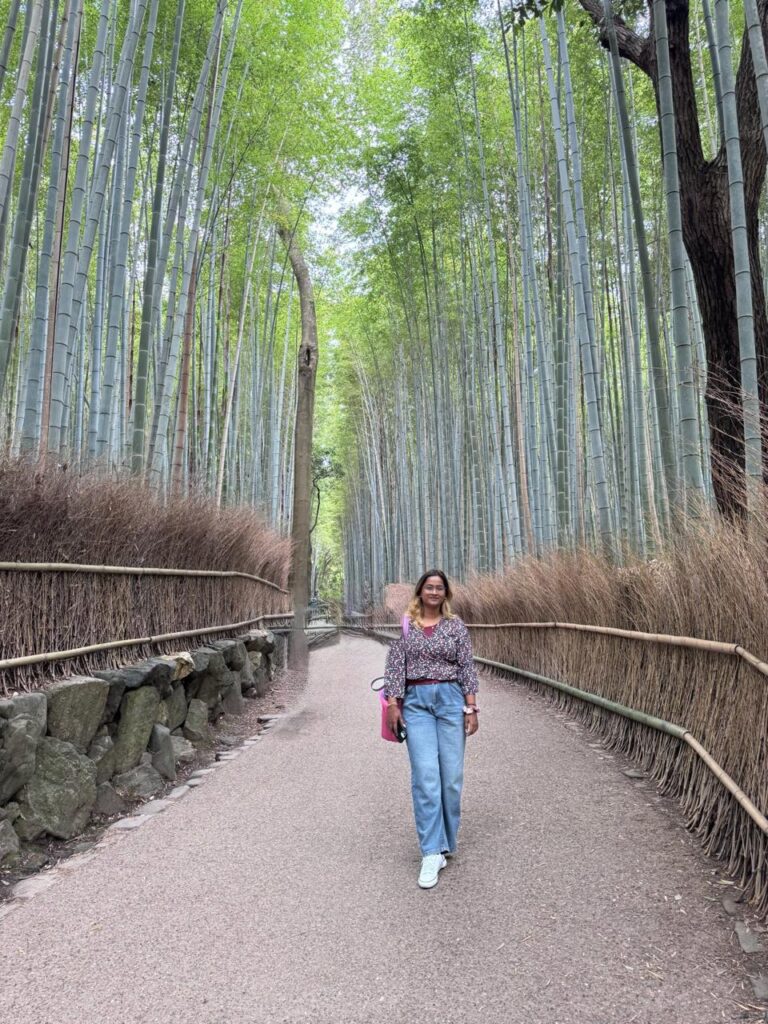
In Kyoto’s Arashiyama, the towering groves of Moso-dake (Phyllostachys edulis) rise like living canopy with “komorebi” (木漏れ日) : the play of sunlight through leaves.
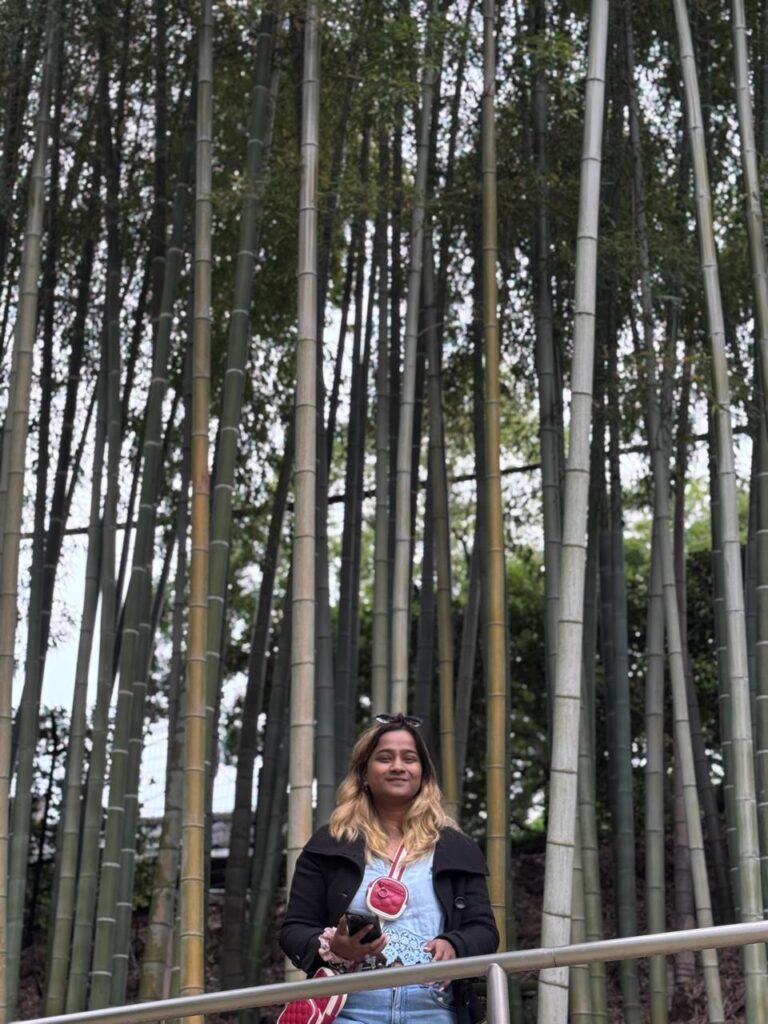
Some other species of bamboo I found were –
At the Takenaka Carpentry Tools Museum, I wandered through the special exhibition held there at the time and came across bamboo weaves so fine they almost looked like fabric. The interactive displays of joinery showed how wood could be locked together with such elegance that nails or screws seemed unnecessary. The history of Japanese carpentry explained in detail that it’s not the material alone but the skill and time invested that makes it feel precious. This reflected “takumi” (匠) : the spirit of craftsmanship, where mastery comes from discipline and dedication.
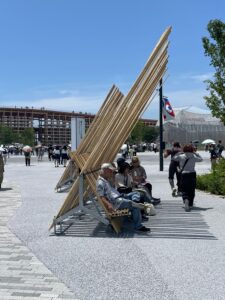
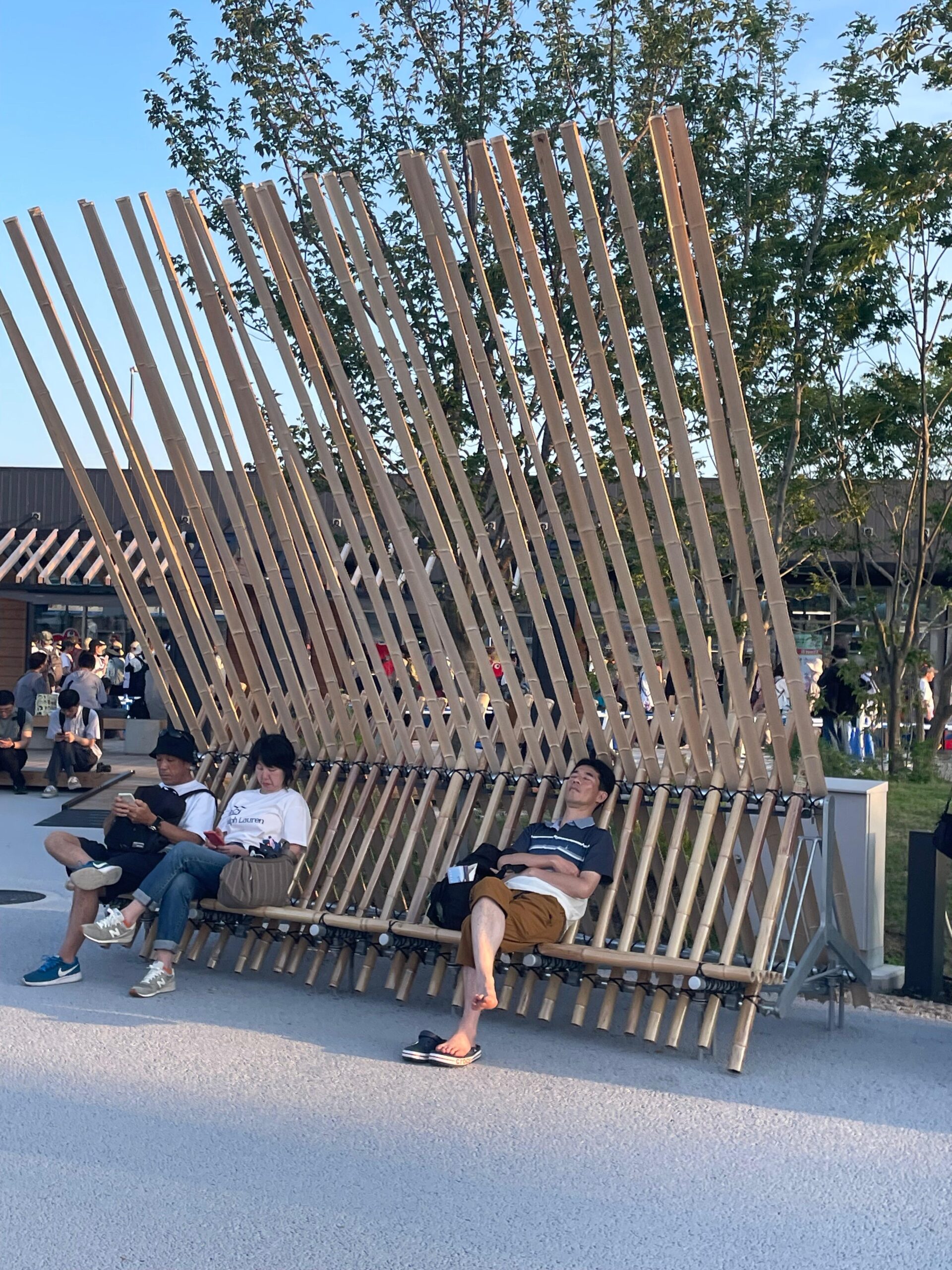
In the middle of the hot Osaka summer, I saw bamboo used in the simplest way yet it carried the biggest lesson for me. The Expo was themed around sustainability and climate responsibility and the seating benches made entirely from bamboo were placed to work with the sun and not against it. Bamboo was more than furniture; it became part of the climate response, showing how thoughtful design can encourage adaptation and keep things beautifully uncomplicated. This was “ma” (間) in practice: the Japanese idea of space and interval, where the relationship between people, objects and time creates harmony.
What struck me most was how bamboo fit seamlessly into Japan’s pace of life. Slow meals, seasonal rituals, quiet gardens and everyday mindfulness. Similarly, bamboo doesn’t rush either, it grows steadily, it adapts and shows up where needed. In a world obsessed with speed, it’s almost comic how this plant reminds us: slow is not lazy, slow is sustainable.This is “ikigai” (生き甲斐), finding meaning in the small and simple.
At Bamboo Ugam, these experiences continue to inspire us. Bamboo isn’t just part of our ZUNJARMACHI forest homestead in the Western Ghats; it’s part of how we imagine slower, more resilient and more thoughtful ways of living.
PRIYANKA DAPODIKAR, FOUNDER AND CREATIVE DIRECTOR
Bamboo Ugam was founded in 2024 by Priyanka Dapodikar, whose deep connection to bamboo began in her family’s homestead in the valleys in Sahyadri ranges, where her family has passionately restored nature and managed a bamboo grove for over 18 years. Having grown up surrounded by this commitment to the land, Priyanka developed a natural inclination toward working with bamboo.
After pursuing her undergraduate and master’s degrees in architecture in London, Priyanka returned to India in 2021 during the pandemic. She used this time to deepen her knowledge of the local bamboo species and explore its potential. Bamboo Ugam was born out of her desire to raise awareness about the possibilities of these local species and to create opportunities for artisanship, which are still in the early stages of development in this field.
Driven by research and innovation, Bamboo Ugam aims to explore new ways to work with bamboo, focusing on understanding and utilising the specific properties of local bamboo species. Priyanka, along with like-minded experts, has embarked on this venture to bring bamboo into contemporary design and architecture.
This will close in 0 seconds
Shubham Margale, Apprentice Craftsman
Shubham has been working with bamboo since 2019, slowly learning and refining his skills over the years. He has alot of respect for the material and enjoys exploring what can be made from it.He also helps his family with rice and seasonal farming, staying connected to the rhythm of the land. At Bamboo Ugam, he keeps learning both traditional and new techniques and looks forward to becoming better at his craft with each passing year.
This will close in 0 seconds
SURESH KOKARE, HEAD OF CRAFTSMANSHIP
Suresh brings us over 18+ years of invaluable experience to the craft of bamboo work, a passion that has been ingrained in him since childhood. Over the years, he has worked on a wide range of projects, from handcrafted articles and furniture to architectural products. Suresh emphasises, ”We want to highlight the beauty and potential of local bamboo species through our work, supporting sustainable practices and traditional craftsmanship.”
His deep connection to the local bamboo species in Western Ghats, as well as his roots in the Sahyadri mountains, strengthens his dedication to working with bamboo. With Bamboo Ugam, he hopes to nurture a future where bamboo craftsmanship quietly thrives and continues to inspire.
This will close in 0 seconds
ANKUSH BESAWADE, Craftsman
Ankush has been working with bamboo since 2019. His early life spent amidst the local bamboo ecology gives him an intuitive understanding of the material.
In addition to supporting the team with preparation, treatment and finishing work, he is deeply involved in farming alongside his family. For him, Bamboo Ugam is a place to keep learning, work with his hands, and stay connected to the craft.
This will close in 0 seconds
Beyond crafting products, we offer immersive experiences to connect people with bamboo’s potential.